Start with platform height, footprint, and support surface
Scissor lifts go straight up. They work best when the platform can sit under the task with enough floor strength and overhead clearance. In Boise’s dense infill and industrial sites, measure:
- Platform height needed versus ceiling, piping, and cable trays
- Machine width against doorways, slab aisles, and elevator cars
- Ground conditions: smooth slab, compacted base, or rutted subgrade
If the surface is finished concrete with tight aisles, look at Electric Scissor Lift Rental. If the path crosses mud, aggregate, or slopes common on new builds, consider Rough Terrain Scissor Lift Rental.
Boise conditions that change the choice
- Semi‑arid swings: Hot summers and frequent freeze‑thaw cycles can loosen topsoil and heave temporary surfaces. Outdoor staging benefits from machines built for uneven terrain and variable footing.
- High UV exposure at elevation: Prolonged outdoor parking favors models with durable finishes and weather‑resistant components.
- Industry mix: Semiconductor interiors and healthcare build‑outs often require non‑marking tires and low‑emission power. Large regional distribution buildings need long run time and compact width for narrow rack aisles.
Narrow the category by power and tires
- Electric slab scissors: Compact, low noise, non‑marking. Best for warehouses, clean interiors, and occupied commercial facilities.
- Rough‑terrain scissors: Larger decks, higher capacities, and traction for unfinished jobsites. Suited to exterior steel, mechanical, and envelope work.
When a scissor isn’t the right geometry
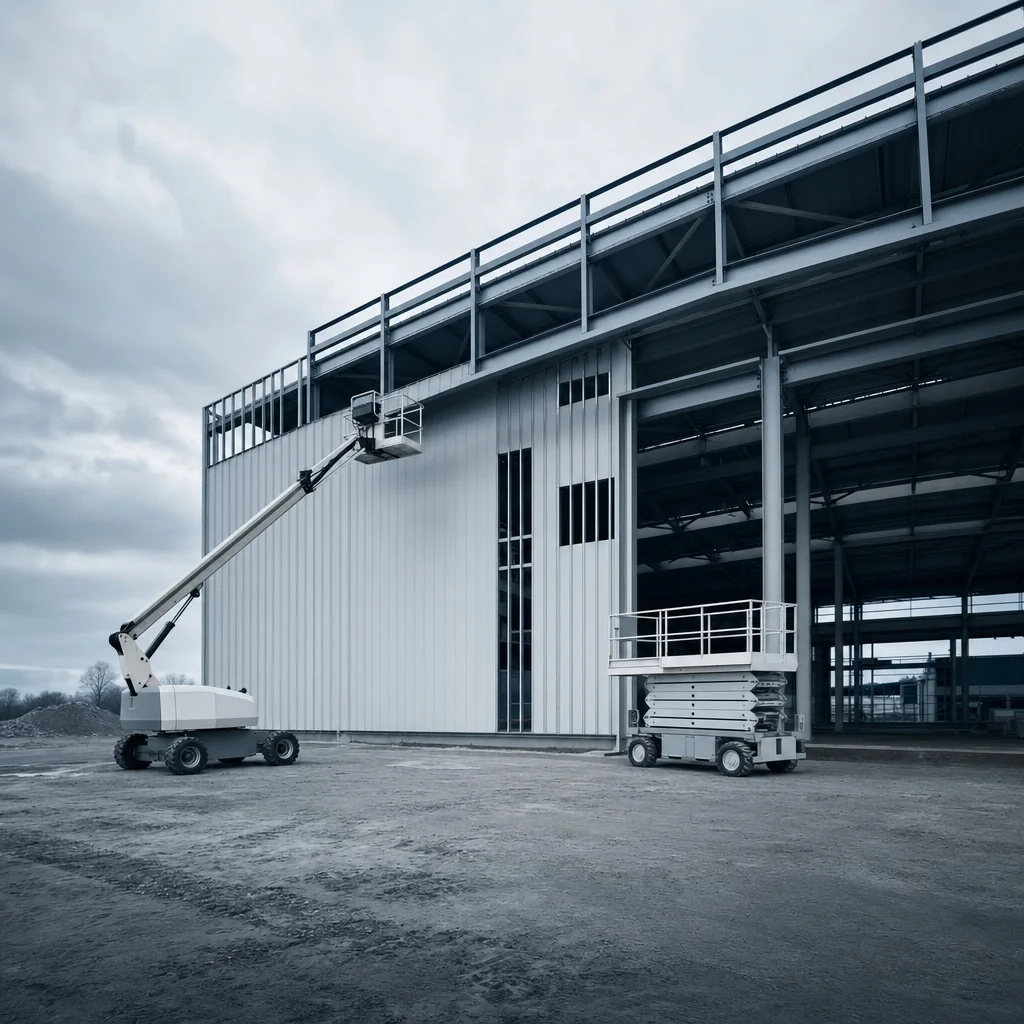
If the task sits offset from the base, or obstacles block straight‑up access, a boom lift may be more efficient. Compare options at Aerial Lift Rental or go directly to Boom Lift Rental.
Typical Boise use cases
- Semiconductor-related interiors needing clean, quiet vertical access
- Hospital and clinic expansions with tight urban logistics
- High‑bay racking, lighting, and sprinkler work in regional distribution buildings
Site conditions, the selected unit’s instructions, and job procedures govern elevated work.