What changes scissor lift choices in Boise, ID
Indoor access around sensitive manufacturing and healthcare buildouts often means non-marking tires, tight turning radiuses, and low-emission power. At the same time, large industrial sites around Boise push for higher working heights, long staging periods outdoors, and uneven subgrades. The regional climate adds wide daily temperature swings and stronger sun exposure at elevation, which influences platform electronics, hydraulic seals, and finishes when a unit sits outside.
How we structure comparisons
- Start with the task geometry: height, reach, and whether the machine can sit below the task.
- Consider ground bearing and slab integrity for interior projects versus compacted fill on new pads.
- Note power constraints: indoor battery charging, noise limits, and ventilation for enclosed work.
- Factor staging: exposure to sun and freeze-thaw cycles for units stored on site.
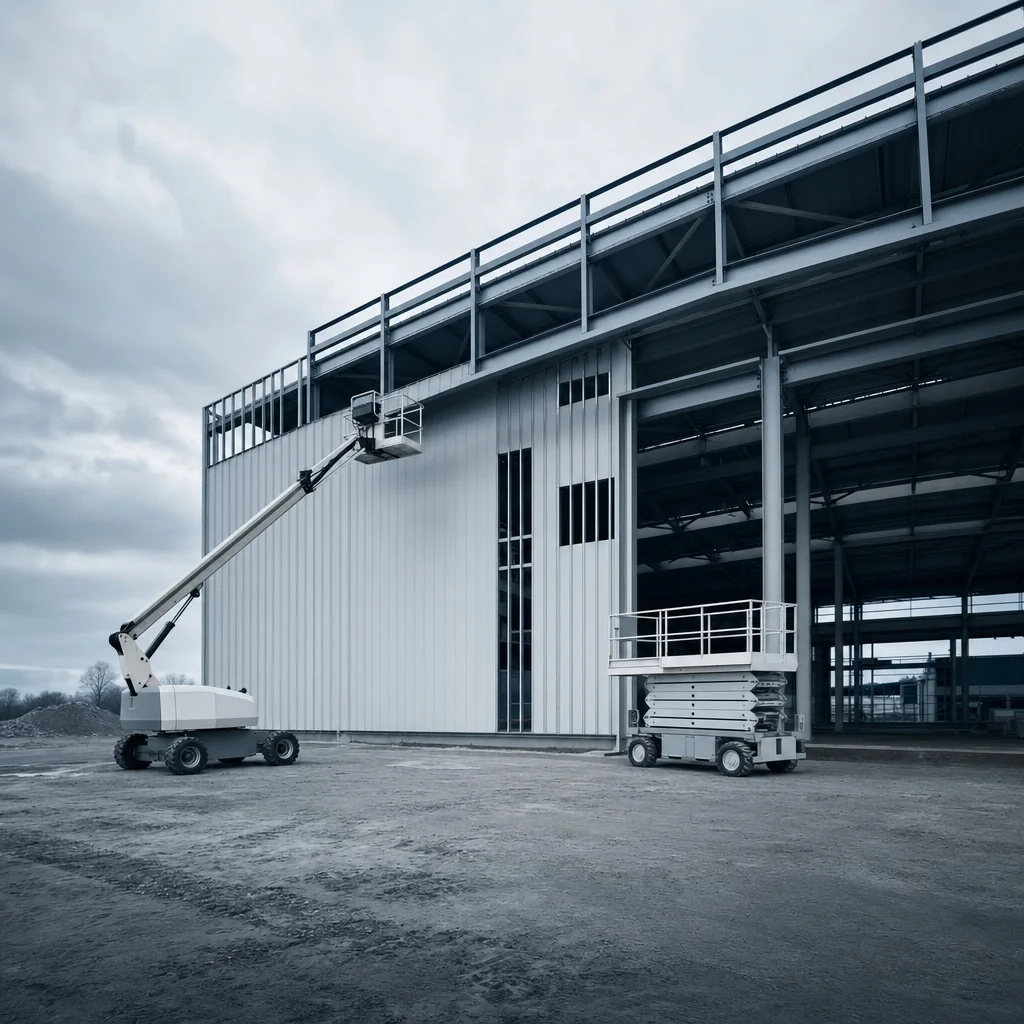
From there, we point to a short list of equipment classes that commonly fit local patterns: - Electric slab scissors for finished floors and controlled airspaces. - Rough-terrain scissors where gradeability and platform capacity matter on developing sites. - Boom lifts when obstacles require up-and-over reach beyond a scissor’s straight vertical path.
Where to continue
If you’re refining an indoor plan with sensitive floors and narrow aisles, start with /electric-scissor-lift-rental/. For exterior work on unsettled ground, see /rough-terrain-scissor-lift-rental/. When the task demands outreach around structures, review /articulating-boom-lift-rental/ and /telescopic-boom-lift-rental/. Broader staging needs often include /generators-light-towers-rental/ and /temporary-fencing-barricades-rental/.
Actual conditions, the selected unit’s instructions, and site procedures govern elevated work. Use the pages here to frame constraints and create a focused request for quotes with local vendors.