Fit the lift to interior constraints first
- Clearance: Verify height under sprinklers, ducts, and cable trays.
- Footprint: Match machine width to door frames and aisle pinch points.
- Floor load: Confirm slab capacity at the platform location and along the route.
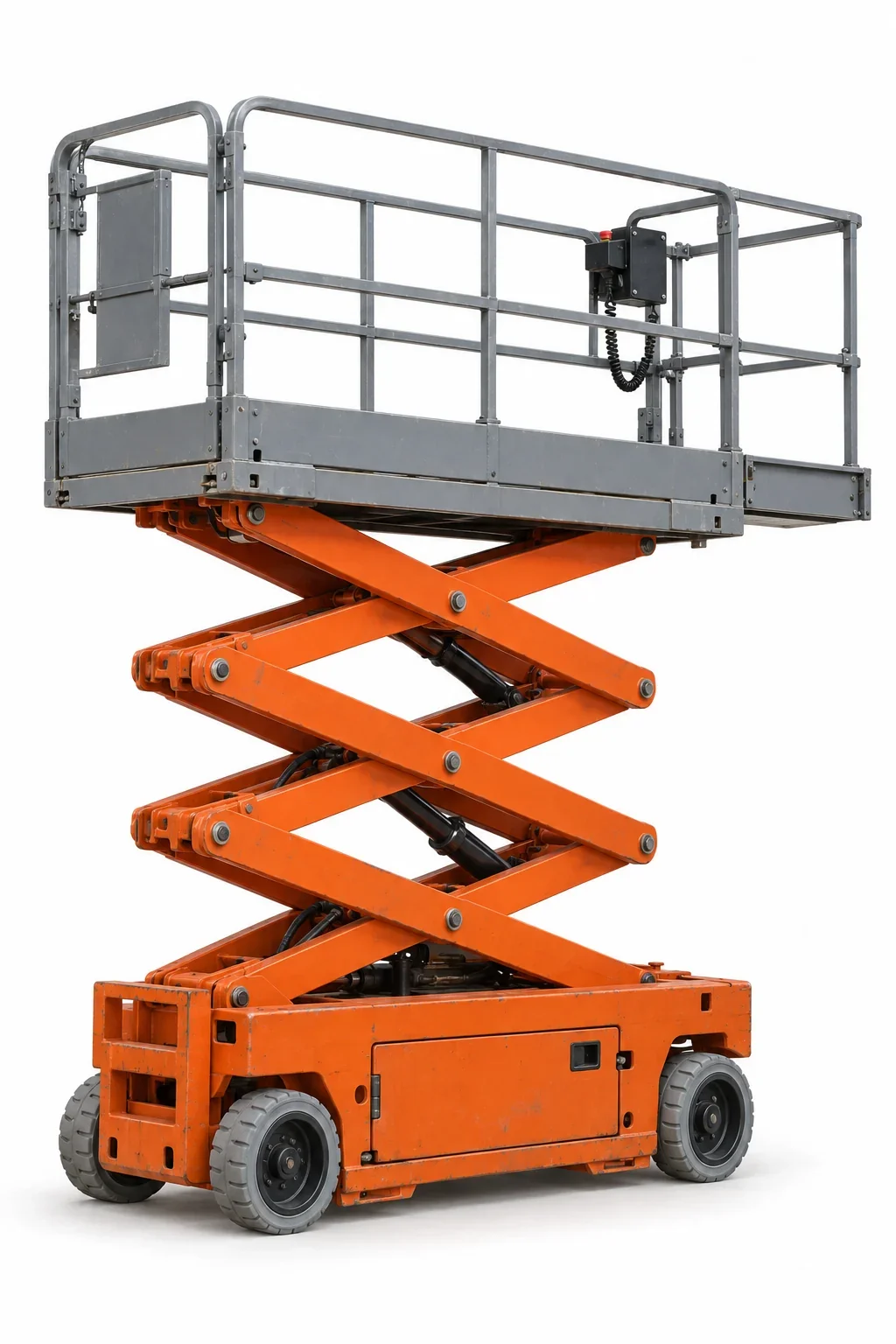
Electric slab scissors work well in semiconductor support spaces, hospital build‑outs, and commercial tenant improvements where non‑marking tires and quiet operation matter.
Why Boise’s environment matters indoors
- Elevation and dry air favor low‑emission equipment inside sealed buildings.
- Large local distribution facilities push for compact widths to navigate long, narrow rack runs.
- Projects tied to sensitive interiors may require clean, well‑maintained units with minimal particulate output.
Platform height and deck options
Pick a platform height that reaches the task with a modest buffer for tools and positioning. Slide‑out decks help center work over the guardrail when the base sits close but not flush. If the task sits offset by structure or façade elements, review Aerial Lift Rental to compare boom options.
When electric scissors are not ideal
- Unfinished exteriors with ruts, mud, or loose base
- Steeper grades between building areas
- Tasks requiring lateral outreach rather than straight vertical travel For exterior or rough approaches, see Rough Terrain Scissor Lift Rental.
Site conditions, the selected unit’s instructions, and job procedures govern elevated work.