Picking an access path: below, beside, or up-and-over
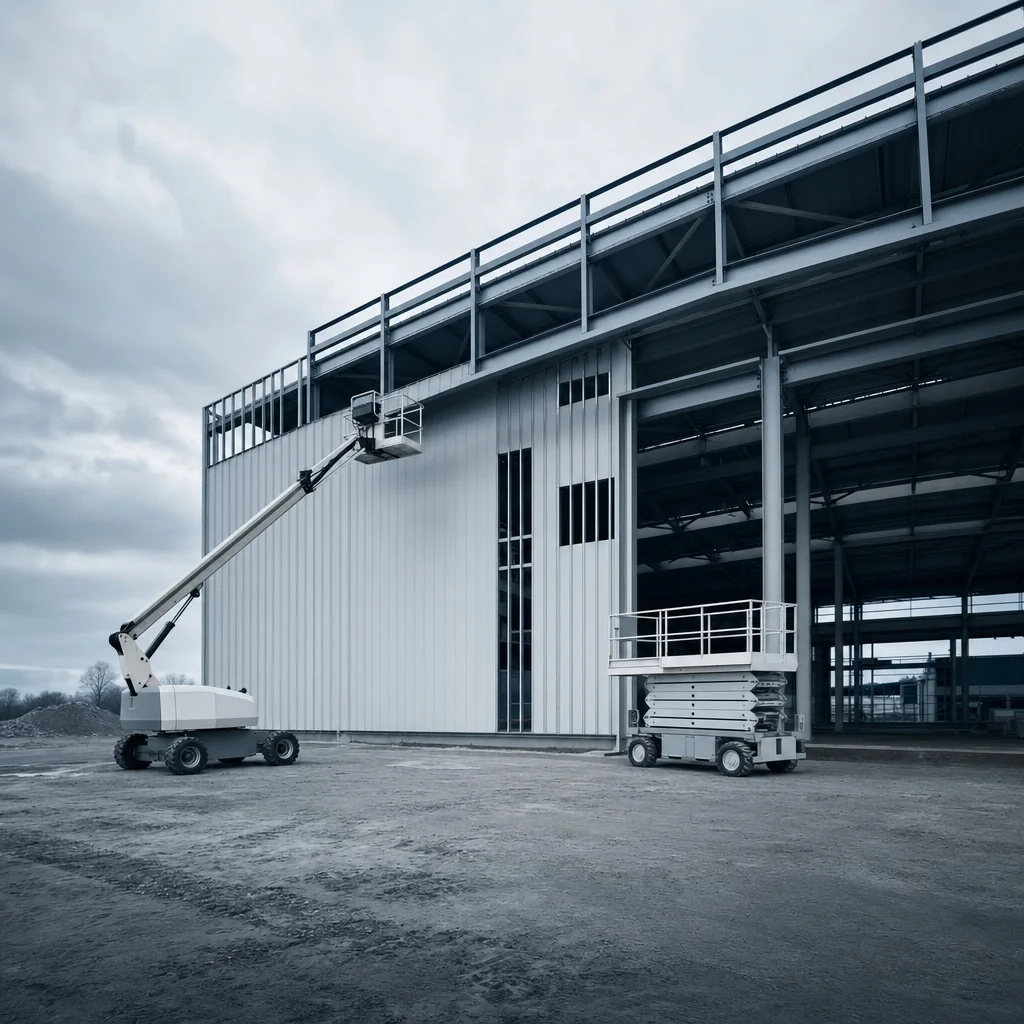
- Straight-up indoor work on flat slabs points to /electric-scissor-lift-rental/ or /vertical-mast-lift-rental/ when the machine can sit directly beneath the task.
- Uneven grades or exterior pads favor /rough-terrain-scissor-lift-rental/ when a wider platform is needed at moderate heights.
- Obstructions or set-backs call for /boom-lift-rental/. For tight, complex routes see /articulating-boom-lift-rental/; for long, direct reaches see /telescopic-boom-lift-rental/.
Surface and route realities in Boise
- Freeze–thaw cycles can change soil support under gravel lanes week to week. Verify approach firmness and slab ratings before committing to heavier lifts.
- High UV and dry air age exterior staging faster; plan for equipment that tolerates sun if it will sit outside for extended periods.
- In dense urban work, interior routes may be narrow with low thresholds; compact chassis and non-marking tires reduce floor impact.
Load, height, and work envelope
- Define platform load and the heaviest component you need at height.
- Measure vertical reach, then check how far the platform must offset from the base due to set-backs, machinery, or mezzanines.
- Map swing paths relative to fencing, storage, and lighting to keep lanes clear.
Site products that keep work moving
- Power and lighting: /generators-light-towers-rental/ supports night work, slab pours, and interior tools where utility power is limited.
- Storage: /storage-containers-rental/ protects materials through Boise’s heat and cold swings and organizes deliveries on constrained sites.
- Perimeters: /temporary-fencing-barricades-rental/ manages public separation near urban jobs and secures tool yards on industrial pads.
Material handling alignment
- For pallet work on slabs, see /forklift-rental/.
- For reach to rooftops or set-backs, /telehandler-rental/ pairs well with boom lifts on structural phases.
Actual conditions, the selected unit’s instructions, and site procedures govern elevated work. When your plan reflects local surfaces, routes, and exposure, equipment choices fall into place and changes in Boise weather are less likely to slow you down.